Traveler's Diarrhea
Traveler's diarrhea is one of the most common travel-related illnesses. It usually comes from eating or drinking something contaminated with bacteria, viruses, or parasites, especially in places where water treatment, sanitation, or food-handling standards differ from what your body is used to.
Bacteria cause many cases. Enterotoxigenic E. coli is a frequent culprit, and contamination can happen during food production, preparation, storage, or serving.
Norovirus, rotavirus, and related viruses can spread through contaminated food, water, surfaces, or infected food handlers.
Giardia, Cryptosporidium, and other protozoa can cause longer-lasting symptoms and are often linked to unsafe or inadequately treated water.

How Contamination Happens
The usual pathway is fecal contamination reaching food or water. Sewage can contaminate crops or water sources, untreated water can carry organisms, and poor hand hygiene can transfer germs even when the original food was safe.
Hands matter. A food handler who does not wash properly after using the restroom can contaminate a meal. Travelers can also contaminate their own food by eating with unwashed hands after transit, markets, bathrooms, shared surfaces, or handling money.
Key Prevention Habits
- Wash hands thoroughly with soap and water, especially before eating or preparing food.
- When soap and water are not available, use an alcohol-based hand sanitizer with at least 60% alcohol, then wash properly when you can.
- Choose busy, clean-looking food places where hot food is served hot and turnover is high.
- Be cautious with ice, raw produce washed in unsafe water, unpasteurized dairy, and food that has been sitting out.
- Use bottled, boiled, filtered, disinfected, or otherwise reliably treated drinking water where tap water is not considered safe.
Travel Water Filters and Purifiers: Choosing the Right Bottle
Water treatment is not one-size-fits-all. In a modern city with treated tap water, you may only care about improving taste or reducing chlorine and lead. In rural areas, developing countries, wilderness environments, or destinations with unreliable infrastructure, you may also need protection against bacteria, viruses, and parasites.
The key mistake many travelers make is assuming that all filtered water bottles are equivalent. They are not. Some bottles only improve taste. Some remove bacteria but not viruses. Only a few are true travel purifiers suitable for high-risk destinations.
What Protection Do You Actually Need?
| Threat | Typical Sources | Why It Matters |
|---|---|---|
| Chlorine taste/odor | City tap water | Improves taste and smell |
| Lead or metals | Old pipes, contaminated infrastructure | Long-term toxicity concerns |
| Bacteria | Unsafe tap water, streams | Common cause of traveler's diarrhea |
| Viruses | Poor sanitation systems | Major risk in many developing countries |
| Parasites | Rivers, lakes, untreated water | Giardia and Cryptosporidium risks |

Quick Recommendation Guide
Best for City Travel in Developed Countries
Brita Premium Filtering Bottle or LARQ Bottle Filtered
Good for chlorine taste, better-tasting hotel tap water, and basic lead reduction. Not suitable for rural travel, untreated water, or virus protection.
Best for Backpacking and Adventure Travel
LifeStraw Go Series or Grayl GeoPress / UltraPress
Good for hiking, rural travel, and developing countries. Grayl is significantly more protective than LifeStraw because it also treats viruses.
Best for High-Risk International Travel
Grayl GeoPress, LARQ PureVis 2 with filter, or SteriPEN Ultra
Best for unreliable sanitation, overland travel, long-term backpacking, and remote expeditions.
Product Images and Quick Notes
Product photos are shown from product or retailer pages and link back to their source. Before buying, check the current manufacturer page, certifications, replacement-cartridge rules, and whether the exact model treats viruses.
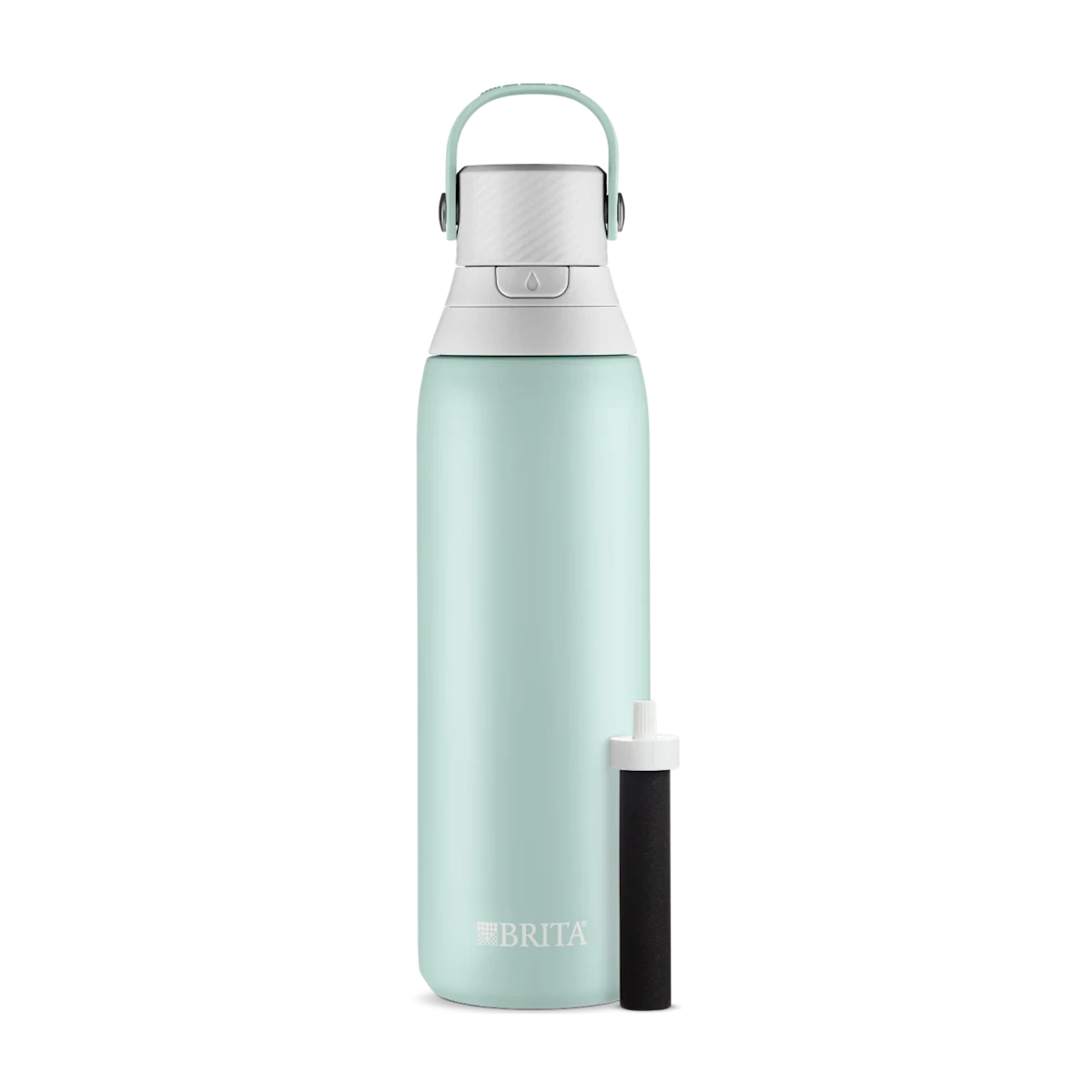
Brita Premium Filtering Bottle
City tap water
Good for taste and chlorine odor; not a purifier for untreated water.
Image/source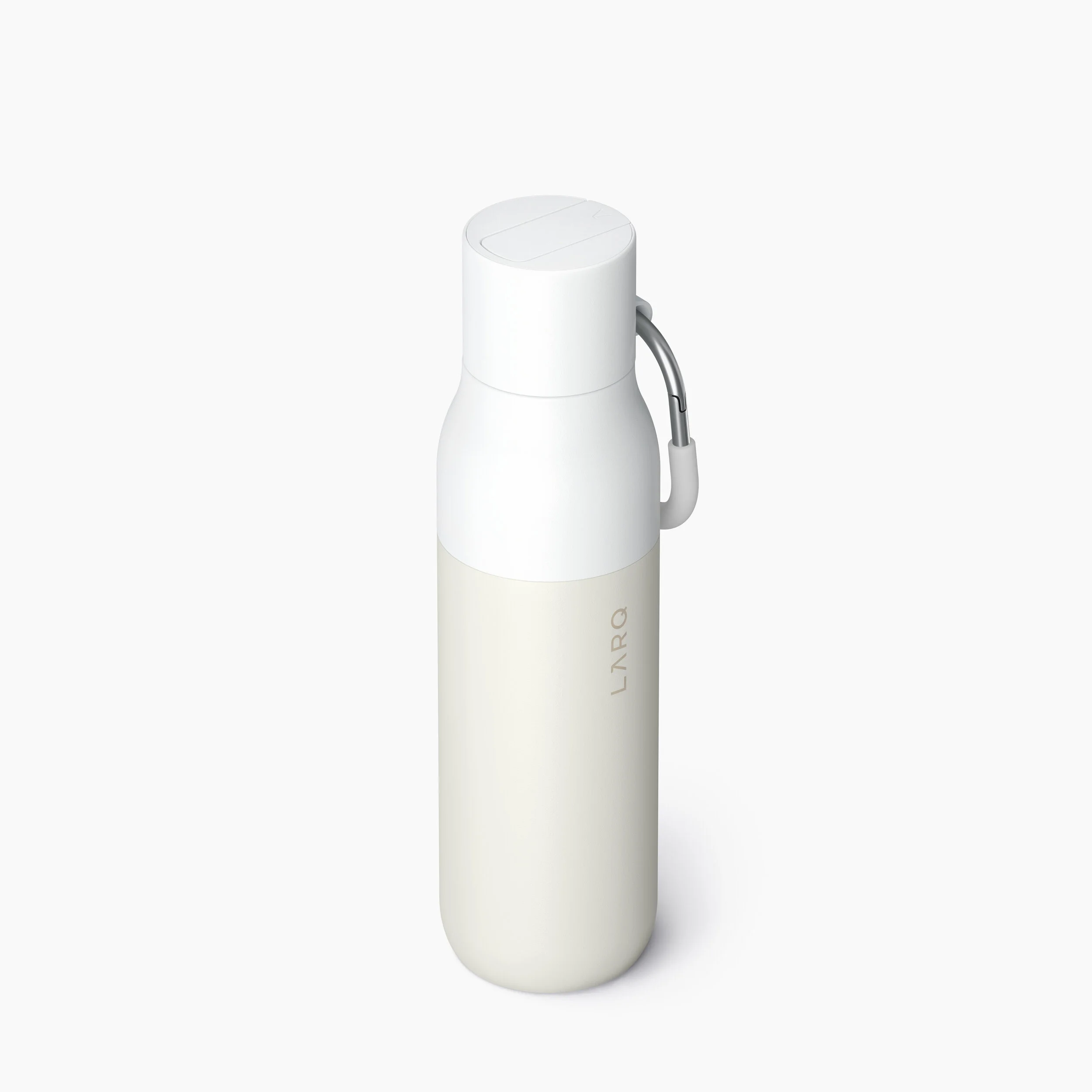
LARQ Bottle Filtered
Urban travel
A sleek filtered bottle for treated tap water, hotels, airports, and taste improvement.
Image/source
LARQ PureVis 2
Premium travel bottle
Combines filtration features with UV-C; verify the exact cap/filter setup before relying on it.
Image/source
LifeStraw Go Series
Hiking and backpacking
Strong for bacteria and protozoa; not designed as virus protection.
Image/source
Grayl GeoPress / UltraPress
Serious international travel
A true purifier category option covering viruses, bacteria, and protozoa.
Image/source
SteriPEN Ultra
UV treatment for clear water
Lightweight UV purifier; does not remove sediment, metals, chemicals, or improve taste.
Image/sourceComparison Table
| Product | Chlorine | Lead/Metals | Bacteria | Viruses | Parasites | Best Use |
|---|---|---|---|---|---|---|
| Brita Premium Filtering Bottle | Yes | Limited | No | No | No | City tap water |
| LARQ Bottle Filtered | Yes | Some reduction | Limited | No | No | Urban travel |
| LARQ PureVis 2 | Yes | Yes | Yes | Partial, depending on setup | Yes | Premium travel bottle |
| LifeStraw Go Series | Minimal | Model-dependent | Yes | No | Yes | Hiking and backpacking |
| Grayl GeoPress / UltraPress | Yes | Yes | Yes | Yes | Yes | Serious international travel |
| SteriPEN Ultra | No | No | Yes | Yes | Yes | UV purifier for clear water |
Legend: Yes = strong protection, Limited/Partial = model-dependent, No = not designed for this.
Why LARQ PureVis 2 Is Marked Partial for Viruses
The LARQ PureVis 2 combines two separate technologies: a physical filter and UV-C light in the cap. That does not automatically make it a universally reliable global travel purifier in the same category as a Grayl GeoPress.
Virus protection depends on which filter cartridge you use, water clarity, UV exposure effectiveness, bottle geometry, and whether microbes receive enough UV dose. The LARQ filter is mainly aimed at chlorine taste/odor, some heavy metals, VOCs or chemicals, and particulates. It is not a true virus-removal membrane filter.
What the Filter Does
Most portable bottle filters cannot physically remove viruses unless they are specialized purifier systems. Bacteria are roughly 0.2-5 microns; viruses are much smaller, often around 0.02-0.1 microns. So the LARQ filter itself is not the main virus solution.
What UV-C Does
UV-C can deactivate microbes, including bacteria and some viruses, and is used in hospitals, municipal water systems, and devices such as SteriPEN. It works best when water is clear, exposure is sufficient, and particles are not shielding organisms from the light.
LARQ PureVis 2
Good for airports, hotels, urban travel, reducing microbial growth inside the bottle, and lower-risk international travel.
Less ideal for rural Africa, untreated village water, jungle trekking, or highly questionable tap water.
Grayl GeoPress
Designed for high-risk travel, untreated water, remote environments, and countries where viral contamination is a realistic concern.
Grayl is simpler to trust for virus protection because it is marketed and tested as a purifier, not merely a filtered smart bottle.
The Simplest Rule
If you mainly travel in Europe, Japan, South Korea, Singapore, North America, and major cities globally, LARQ is usually sufficient and much more pleasant to use.
If you regularly drink from rural taps, buses or train stations, questionable sinks, rivers, lakes, or remote areas in developing countries, Grayl is the safer choice.
The Most Important Distinction: Filter vs Purifier
This is the single most important concept for travelers. Most water bottles are filters. They usually protect against parasites and bacteria, but often not viruses. Brita, LifeStraw Go, and many hiking filters sit closer to this category.
Purifiers are designed for international travel and unsafe water systems. They target bacteria, parasites, and viruses. Grayl GeoPress, SteriPEN, and some UV-based systems sit closer to this category. If you travel extensively in Africa, South Asia, Latin America, or remote regions, virus protection becomes much more important.
Best Overall Choices
Best Urban Travel Bottle
LARQ Bottle Filtered
Stylish, strong for hotels and airports, and best for treated-water taste improvement in places such as Europe, Japan, Korea, and Singapore.
Best Lightweight Adventure Bottle
LifeStraw Go
Simple and rugged, with strong bacteria and protozoa protection for hiking and backpacking.
Best One-Bottle Global Solution
Grayl GeoPress
One of the few true purifier bottles, covering viruses as well as bacteria and parasites.
Best UV Solution
SteriPEN Ultra
Lightweight and effective against microbes in clear water, but it does not remove sediment or improve taste.
Important Reality Check
No portable bottle is perfect. Even the best purifier bottles have trade-offs: heavier weight, slower flow, cartridge replacement costs, battery dependence for UV systems, and reduced performance in muddy water.
For many travelers, the ideal setup is a lightweight filter bottle for daily use plus purification tablets or UV backup for higher-risk situations. That combination is often lighter, cheaper, and more reliable than relying on a single magic bottle.